
Welcome to my little corner...All over the map with thoughts, I'm just here to blog about different things: life, music, stuffed animals, restaurants, shops, dreams, film, books, magazines, short stories, food, the sometimes silly, drink, feelings, love and tons more...
Sunday, January 11, 2015
I am trying harder (only eleven days into the new year) to be patient with people who oppose gay marriage, I am. Kind and sincerely understanding words such as the ones below help me.
What might it mean for the church to love gays and lesbians more deeply? First, it would mean listening to their experiences—all their experiences, what their lives are like as a whole. Second, it would mean valuing their contributions to the church. Where would our church be without gays and lesbians—as music ministers, pastoral ministers, teachers, clergy and religious, hospital chaplains and directors of religious education? Infinitely poorer. Finally, it would mean publicly acknowledging their individual contributions: that is, saying that a particular gay Catholic has made a difference in our parish, our school, our diocese. This would help remind people that they are an important part of the body of Christ. Love means listening and respecting, but before that it means admitting that the person exists.
http://americamagazine.org/issue/simply-loving
What I can't understand and what hurts my very soul is when very traditional churches and other conservative organizations won't even allow celibate gays and lesbians into their ranks. As someone who is baffled by how you can possibly act any less on your "homosexual tendencies" than by being both chaste and celibate, I just don't get that kind of ultra-disapproval.
I've tried "ex gay therapy" and it doesn't work. If anything, it makes you hate yourself even more. I've made my peace with remaining single and celibate the rest of my life, even if my heart hasn't gotten the memo on how to stop loving.
Aside from suicide (also a "sin" in the eyes of many and something I would never do, though I can certainly see how people--in their deepest, darkest hours of torment--could contemplate it) I really can't think of any other way to be "less" gay. I don't mean to be flip or to take such a serious issue lightly.
For someone to come to the excruciatingly painful point in his or her life that taking it is the only way they feel they can escape their pain...well, to me, that shows just how very harmful homophobia can be. Suicide rates among gay and lesbian youth (who are so often judged more than they are helped) are much higher than among straight youth.
It truly saddens me that there is such animosity toward something that is often born out of love (not sex.) A warm and caring attitude like the one in the words above is a far far cry from the cruel homophobia that can drive the already self-hating gay or lesbian to unbearable despair.


Saturday, January 10, 2015
Saturday night shivers...

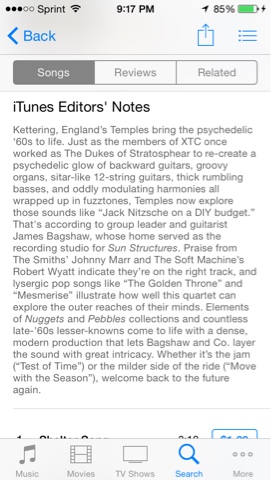
Boy, does this song sound good. I love that feeling you get when you hear a song for the first time and you get shivers all through your soul..."Keep In The Dark" sounds like something the Monkees might have done if they had worked with the Zombies and jumped into the present to hang out with Spoon or Tame Impala. I can't get enough of it! :)

You can watch the video here:
 |
| Jessica Lange shined in season two, where she played ruthless Sister Jude. Tricked by the monsignor with whom she runs a hospital, she is placed in the very same asylum she once tortured her patients in and slowly becomes humbled, undergoing one of the best character transformations ever on television. |
Whether her character Elsa is having a major hissy fit because she didn't get presents worthy of her on her birthday or she's seriously miffed that no one values her talent as much as she does, there are also wonderfully vulnerable moments (rare though they are) where she questions her humanity or takes care of her "monsters" the way a loving mother would her children. Those are the scenes this year that can remind viewers just how talented Ms. Lange is...
A recent article from the New York Times gets it best:
At 65, Ms. Lange is a seductive, sinister hoot in all her “American Horror” impostures — the actress glows with matriarchal mystique. Her women have different accents and back stories, but they share many of same preoccupations with age, power and loneliness. The redeeming underlay of every season is in the characters, who are strangely real even when enacting the most extreme flights of fancy and brutal violence, Ms. Lange most of all: Her heroines are feathered in madness and satire, but each one carries a glint of inner truth — the actress manages to slip some poignancy into all these gargoyles without dimming their brio.
You can read more here:
http://www.nytimes.com/2015/01/04/arts/television/its-jessica-langes-show-on-american-horror-story.html?_r=0
Friday, January 9, 2015
Solace in song

It's not phoniness I'm talking about (I really do like people) but trying to be outgoing when you're truly (no matter whether anyone would believe it or not) very shy.
I'm doing laundry (that's not so peaceful since the agitator continues to cause problems and I have to run and fix it more than once in a cycle) and listening to Triumvirate by Lewis and Clarke, the moniker for Lou Rogai, who sounds like what you would get if you mixed Nick Cave with the Nationals. It's quite a lovely album to have playing on a cold afternoon.
One song, in particular, grabs hard at your heart and fills your soul with the voice of someone who would understand your pain.
An article from Huffington Post captures the album quite well:
Its ambition and scope make Triumvirate somewhat difficult to classify, but alas, one must try: If a steel worker from Pittsburgh had a child with an organic vegetable farmer from Western Oregon and that child, after being trained in both vocations, was sent to a liberal arts school to study classical literature and music theory, Triumvirate, 15 years later, might be the album she/he would create. This is not Rogai's story, but it speaks to the aesthetic of his new record. Amid the burnished strings and sumptuous piano lines there is a gritty, agrarian ethic pulsing through Triumvirate. One feels the reverence for landscape and labor at its core; its beauty is not effortless, it is workmanlike, earned like a harvest wrested from black soil. In the sparse and stirring "The Reach and the Grasp" Rogai sings in a pleasantly rusted, undulant tenor:
The hills have hearts in lonely dawn/And we're listening to its pulse/In a cadence of stormy march/We count the miles between the claps/The lines are etched into the shell/It's the genius of design/There's a feather frozen still in the waterfall/Will you take it as a sign?For Rogai, there is an order and instruction to be found in nature if one has the poise and patience to observe it. The origin of Rogai's fondness for landscape isn't hard to pinpoint, he lives on the fringes of a National Park in Delaware Water Gap, Pennsylvania where he swims, hikes, records and runs his label. His music is informed by the grandeur he wakes to each morning--rivers and mountains, the skyward arcs of hawks and falcons--all the splendor we can lose sight of when we're suffering. Rogai suffers less now. He lives with his son and fiancée, and his love for them was pronounced in the two discussions we had in preparation for this piece. In both phone calls, Rogai effusively updated me on his son's growth in school, music and life. Today Rogai is clean-shaven, with considerably shorter hair. He and Showalter have reconciled and since collaborated on a forthcoming Lewis & Clarke song, and a new calm now mingles with the lingering wildness in Rogai's eyes. You can see it in the superb short film, A Map of a Maze (directed by Kevin Haus, shot by cinematographer Dan Papa) made to mark the release of Triumvirate, or the recent session he recorded for Fogged Clarity in an abandoned stone chapel near his home. In each video, Rogai has the look of a man who has survived to create something special.
You can read more here:
http://www.huffingtonpost.com/ben-evans/lewis-clarke-discover-red_b_5829924.html
Also wonderful is "Let's Be Still" off the head and the heart's album of the same title. It's gorgeous and amazingly peaceful. I love it so much:

The lyrics all together:
You can get lost in the music for hours, honey,
You can get lost in a room.
We can play music for hours and hours
But the sun'll still be coming up soon
The world's just spinning
A little too fast
If things don't slow down soon we might not last.
So just for the moment, let's be still.
You can get lost in the music for hours, honey,
You can get lost in a room.
We can play music for hours and hours
But the sun'll still be coming up soon.
The world's not forgiving
Of everyone's fears.
The days turn into months, the months turn into years.
So just for the moment, let's be still
There tearing down
So we can rebuild
And all this time
Is just circles in my mind
So just for a moment,
Just one moment,
Just for a moment let's be still
Just for a moment let's be still
Just for a moment let's be still
Just for a moment let's be still.
The world's just spinning
A little too fast
If things don't slow down soon we might not last.
The world's not forgiving
Of everyone's fears.
The days turn into months the months turn into years.
So just for a moment, let's be still
Just for a moment let's be still.
Just for a moment let's be still.
Just for a moment let's be still.
Just for a moment let's be still.
Just for a moment let's be still.
Just for a moment let's be still.
Subscribe to:
Posts (Atom)