Monday, January 28, 2019

peace-in-my-life


I feel like I was rather harsh (and also a hypocrite) in my last post...and I just want to say today that I don't think it is ever good to put yourself before someone else, especially if that someone is suffering. The thing is I have been in a place I do not want to be for quite a while now and I want to change that and I think that maybe becoming stoic, cold-hearted and/or falling into self-preservation mode is how I am handing it.

Part of my coping has changed since I lost a friend I really cared about, or rather a three year friendship I really cared about since I'm hoping there is nothing "past" about her...with "ghosting" you never really know what happened, but I am hoping that nothing happened to her. I'm also continuing to have feelings for someone I work with and that has not gotten any better. I would give anything to be Spock and to have either no emotions at all or much, much better control over the ones I do have.

Through no tacit intentions that I am aware of, neither of us talk to each other anymore and my heart silently breaks over this, even if we were never friends in the first place and I've had more than enough time to get used to it. I worry she knows though I have never ever told her and have always (at least I had hoped so) been very vigilant about this. Despite how Hollywood would have you think it, not everyone is receptive to hearing you have feelings for them, especially unrequited ones. 

I know the person I like would not be one of them and this is, of course, the way it should be. Having feelings for a married, straight coworker is one of the worst set of feelings a lesbian could ever, ever have and they should never, never be vocalized or be put forth in any other kind of way.

Most people, I am sure, would say "snap out of it" and I would agree with them, except that I have tried this and more and done everything I can think of to move on emotionally. Last year I confided in a friend outside of work about it and she looked at me like I was out of mind, which, I suppose, I kind of am.

I would say my new year's resolution is to get over it all, but this has been my new year's resolution for the past seven years. Really, really pathetic, I know, that I continue to go on like this, in spirit and emotion. The thing is, though, is that the heart is very hard to reckon with and it has a mind of its own, or so it seems. 

Until things change for the better (and I am determined that they will, no matter how long it takes), I am going to take the advice from the above photo and do my very best to follow it while still not being a cold fish.

Wednesday, January 23, 2019

Emotional vampires don't see themselves in mirrors...


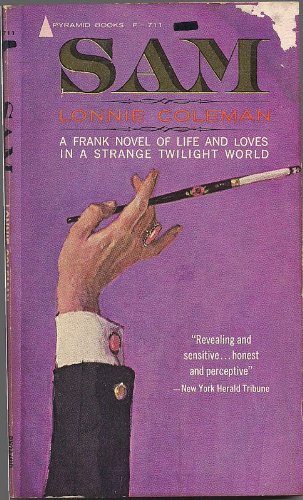
Image result for cover for sam by lonnie coleman


Because I had preconceived notions about _Sam_, I have to say I am pleasantly surprised that I am still thinking about it and also by how much it is both kind of "trashy" and still an important read. Lonnie Coleman's writing reminds me a lot of Jacqueline Susann's and I like that. What is far more striking for me, though, is how there are several different passages that speak to me, as if directly, reminding me that no matter how different the main character may be from you, there are still universal things that hit you with both reassurance (i.e. "you are not alone") and uncomfortable truth.

A lot of drama revolves around Sam's life and the people in it, some of which is very upsetting and even jarring. I tend to shy away from high theatrics, but Lonnie Coleman has a witty way with words, "gets" cats (Andrew is one of the most delightful non-human characters to ever appear in a novel) and can wow you with unexpectedly tender scenes.

One passage, in particular, really affects and if you find yourself ever dealing with histrionics or any kind of behavior from another person that continually weighs you down no matter how much you help that person, keep in mind this: "One thing you have to learn right off in this life: you're not responsible for anybody but yourself. That doesn't mean you shouldn't be kind--and nice, but it does mean you aren't to blame if somebody uses you as the excuse {substitute any self-destructive behavior here}"

This may sound harsh, but I find it very soothing because one thing "emotional vampires"* (some of which appear in this book) can do is make other people feel bad for the things they themselves do. Life is hard enough without continually having to deal with those who use manipulation to keep you tethered to them in the most unhealthy of ways. I took this (and more away from _Sam_) and am glad that I had the chance to read such a rocky and well-written tale, where anything can happen and does.


*"Emotional vampires" is a term I first heard of a few years ago when I was doing some research on dealing with difficult people. I could not believe how familiar some of the "types" were to me and when I finished reading _Sam_ and thought back on some things the quote I make reference to really, really hit me hard, yet also helped me. I firmly believe we should be there for people, but I also feel that there are "toxic" people (even amongst our families) we deserve to be free from when they create nothing but hardship and heartache. I don't think it's selfish, but more a matter of self-care. What follows below is an excellent article--along with some very heartfelt and perceptive comments--on the subject, focusing on the five main types of emotional vampires:

https://www.psychologytoday.com/us/blog/emotional-freedom/201101/the-5-types-emotional-vampires-in-your-life


Thursday, December 20, 2018

The Washington Times is one of the few papers left (and I do not mean this is as a compliment) that regularly features anti-gay op ed pieces. Their most recent one argues that (in terms of discrimination) no class of people should be protected based on their "desires," meaning for them (The Washington Times) sexual ones. For publications and people who are homophobic, more times than not they frame their arguments against gay rights strictly in terms of the sexual aspect, which is why I believe they so often use the word "homosexual" over the more friendly and accepted "gay."

I get so very tired and saddened by this argument...by the homophobic belief and argument that gay people are strictly ruled by some sort of salacious desire and that they have (or want to have) sex 24/7. This is not the case and I think it is the only argument they have and a very, very flimsy one at that. I can only speak for myself, but I have a feeling I am not the only gay person who could care less about desire and who is much more focused on living a good, clean life and who has a heart that wants love as much as any straight person does.


Just as homophobic people apparently cannot change who they are (though belief is not inborn the way being gay is) neither can gay people. The only "ex-gay therapy" I know of that works is one I do not even want to think about...because as much as I find some days a very, very hard (near impossible) struggle and have had tempting thoughts about non-existence, I still want to live, not die.

Tuesday, December 18, 2018

It seems to me that not thinking about something (or someone) is a little bit easier than not feeling about something (or someone). I am just scraping by at not thinking (mostly not, at least) but failing miserably at not feeling. 

Books often me re-direct my thinking, which is one reason of many I love them so much. Sometimes, though, they hit me hard and oddly comfort and connect to my thoughts and feelings in a way I both want to avoid and want to embrace.

Currently, I am reading this:

Image result for library by the river book debra

It is full of thoughts and feelings that I have rarely encountered before in fiction, though, as I find with every lesfic book I read, the main character's feelings are returned. I would so like to find a novel or short story that deals realistically, unflinchingly and without any kind of starry-eyed idealism, with true unrequited love...not the 'fake' kind where both characters (*sigh*) realize at the end they really do like each other. 

Reading can help you feel less alone in situations you think are unique to you and that can help you feel less alien and monster-like. But, despite all the wonderful books I have read, I still long for that one

In the book I'm reading now there are so many passages that hit me hard (there are ones about coming out to family that eerily reflect my own experience, down to the words the mother says and the actions she takes in making absolutely clear she will not be accepting her daughter).

This one comes very close to hitting the nail on how I would give anything to never have encountered the feelings (and maybe even the person, as lovely a person as she is) within me:

The point being, I wasn’t a person who was uncomfortable with physical contact. So long as it was friendly, of course. Why then, was the feeling of Sarah’s hand on mine so unnerving? If I had the luxury of foresight, I might have said it was an omen. An omen telling me to thank her and walk away. Keep my distance. But I didn’t have that luxury, and I didn’t walk away. She wouldn’t let me.

I must stress again that this book is about requited feelings and that for me, the "she wouldn't let me" is not the person but my persona or whatever it is in charge of my emotions. But even so I relate to them. As much as I like the person I like and as much as she has been a great role model for me, I often wish I had never met her :(

The closest I have ever come to a novel capturing the pain of unrequited love is this:
by Dorothy Strachey


And, really, I get the distinct impression that the only reason there is no reciprocal relationship is because the recipient does not feel it is right to act on their feelings, something else I can relate to...
Don't get me wrong, I am happy for people who are happy about the holidays and spending their Christmas with their family. I don't begrudge them a single thing and wish them well, with all of my heart and soul. The problem is how some happy holiday people treat those of us who (often unbeknownst to them) struggle deeply.

"Did you see your family yesterday?" Someone asked me the day after Thanksgiving.

"No," I said, quietly, moving on to ask them about their holiday.

"You didn't go see your parents?" This person persisted, a look of judgment on her face that was unmistakable and piercing.

"It's kind of a long story," I mumbled, in a kind of jokey voice, hoping she would just drop it.

She must have seen the look on my face because she did, but she does this each major holiday and never seems to understand that I don't want to explain or talk about it. She doesn't need nor have to know that my situation has to do with my being gay and coming from a family that is so homophobic and strictly religious to say it is suffocating is putting it mildly.

I long to say to holiday happy people: please don't judge those of us who don't see their families at Christmas or those who choose to clam up about it. Not only is it not your business, it is something you are judging (sometimes harshly and unfairly) without knowing anything about the situation.

The holidays are not a happy time for everyone and as long as we are not being a Scrooge about it and not commenting on how you spend your holidays, I think we have a right to be left alone in our answering and in our being subject to scrutiny.